
A King’s Guest List
If you’ve ever been to Oktoberfest (or even just stalked it on Instagram with a pretzel in one hand and beer envy in the other), you’ll know the heart of the festival beats inside the beer tents. But here’s the twist: there aren’t a hundred different breweries jostling for your attention. Nope. There are only six official beer tents, and they’re not there by accident. They’re there because—wait for it—a king said so.
Yes, really. Back in the 19th century, King Ludwig I of Bavaria (the same chap who gave us that royal wedding blowout in 1810, which basically became the world’s biggest keg party) decided there should be rules about what counts as Munich beer. He wasn’t about to let just any old brewer roll up with a dodgy batch and call it Bavarian gold.
So, a decree was made: only breweries that brewed within the Munich city limits, using strictly local ingredients, could slap the title of Munich Beer on their barrels. Think of it like a VIP guest list—you had to be born and brewed in Munich to get past the velvet rope. The chosen six? Hofbräu, Löwenbräu, Paulaner, Spaten, Hacker-Pschorr, and Augustiner. Royal seal, royal standards, royal hangovers guaranteed.
The Purity Law: Beer by Royal Command
And here’s where it gets really fun: the Reinheitsgebot, also known as the Bavarian Beer Purity Law of 1516. This centuries-old law said beer could only be made with three ingredients: barley, hops, and water (yeast, cheekily, wasn’t “discovered” until later). At first glance, it sounds more restrictive than a Martha Stewart dinner party seating chart, but it was genius. It kept prices stable, protected quality, and stopped bakers from panicking that all their wheat was being stolen for beer. Win-win! (Read more about Reinheitsgebot)
Water From the Depths of Time
Now, about that water. Munich’s breweries must use brewing water from deep wells within Munich city limits, tapping pristine aquifers in Tertiary molasse stone and gravel. Take Hofbräu, for example: their water comes from their own private well drilled 150 meters deep (that’s nearly 500 feet!). This isn’t your everyday tap water—it’s Pleistocene-era water, deposited around 15,000 years ago during glacial melt, perfectly soft and naturally filtered. (hofbraeu-muenchen.de)
Add in barley from Bavarian malt houses and hops from the legendary Hallertau region, and you’ve got liquid history in your stein. Every sip is more geology lesson than cocktail garnish—and that’s exactly the point.
From Rules to Revelry
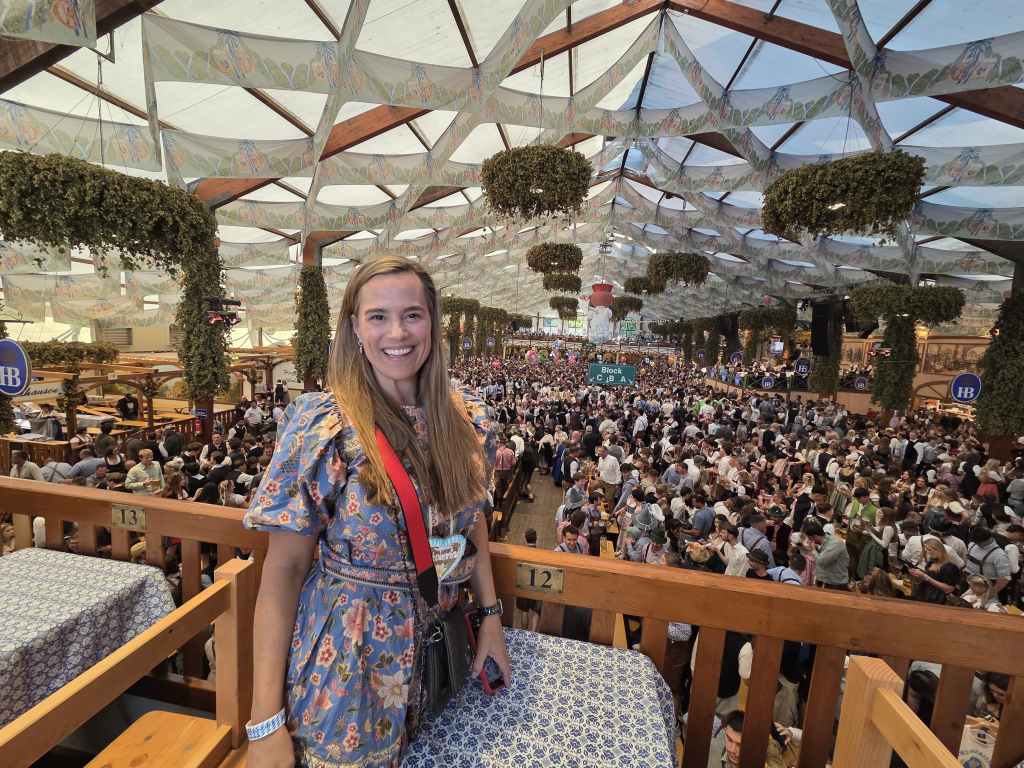
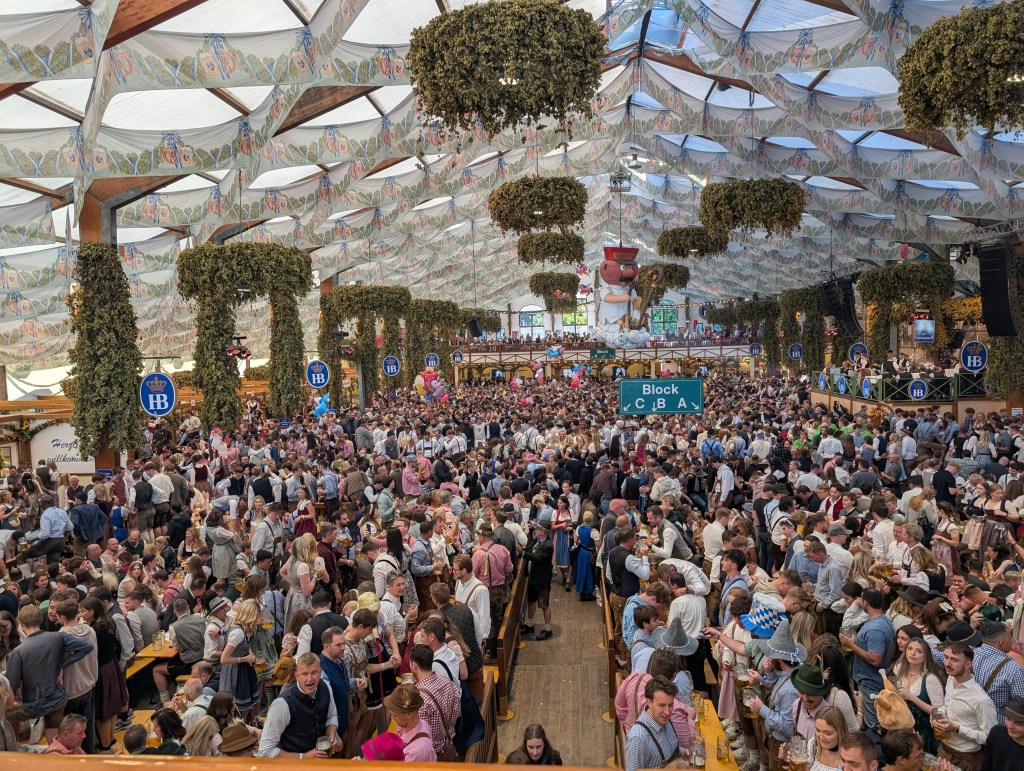
And now… the fun part. Once you step into an Oktoberfest beer tent, all the careful history and brewing science melts into a whirlwind of sights, sounds, and smells. Each tent is like a self-contained universe, complete with its own character. Hofbräu’s tent is famously boisterous, filled with international travelers singing along to oom-pah classics; Augustiner’s tent has a slightly more traditional, hometown vibe; while Paulaner and Löwenbräu tents each have their quirks and loyal fans.
The tents are massive—seriously, we’re talking the size of a small airplane hangar—but somehow cozy. Wooden tables stretch for what seems like miles, and everyone is crammed together like one enormous, merry Bavarian family. Strangers clink glasses and toast repeatedly, with that infectious “Prost!” energy that makes it impossible not to join in. Even if you have zero idea what song is playing, or why the accordion is doing that thing, your body insists on moving along anyway.
A Feast for All Senses
And the food! Pretzels bigger than your head, sausages in every style imaginable, roast chicken glistening with buttery perfection, sauerkraut, potato salad, cheese plates, and dumplings that would make your grandmother proud. The smell alone is intoxicating—and paired with a freshly poured Maß (that’s one-liter beer stein, for the uninitiated), it’s like a symphony for your taste buds. (Official Oktoberfest Food Guide)
If you’re the type who likes to pace yourself, don’t. Oktoberfest isn’t about moderation. It’s about embracing all of it—from the first bite of pretzel to the last clink of glass before the band plays the final notes of “Ein Prosit.”
Fashion and Fun: Dressing the Part
Part of the charm of Oktoberfest is the attire. Lederhosen and dirndls aren’t just costumes—they’re cultural badges of honor. Whether you’re a first-timer or a returning pro, dressing the part instantly puts you in the festival spirit.
Here’s the lowdown:
- Dirndl: A feminine outfit with a bodice, blouse, full skirt, and apron. Comfortable enough for hours of dancing, singing, and stein-hoisting.
- Lederhosen: Leather shorts or trousers with suspenders, traditionally worn with a checkered shirt and knee-length socks. Iconically Bavarian.
- Apron Bow Placement: A fun cultural signal:
- Left = single
- Right = taken
- Back = widow
- Front = virgin
These little cues add a playful layer to the festivities—you can read the room without saying a word.
Where to Find Authentic Outfits:
- Bavarian Outfitters – Rent or buy dirndls and lederhosen, including premium options and a huge selection for all sizes.
- Almwelt GmbH – Located near Marienplatz, they offer traditional garments, including custom-made Lederhosen for a truly authentic look.
Shopping in person is part of the fun—imagine walking down the streets of Munich trying on dirndls, adjusting aprons, and getting fully festival-ready. And if you’re not in town, both retailers also offer online options, so you can still get that authentic Oktoberfest look anywhere in the world.
Put on your outfit, raise your stein, and suddenly you’re not just a visitor—you’re part of the living, singing, dancing tradition of Oktoberfest.
Travel Tips for First-Timers
If you’re planning a visit, timing is everything. Arrive early if you want a table without elbowing your way through a sea of merry revelers. Weekdays are calmer, evenings are a carnival. And remember: your stein is heavier than it looks. Pace yourself, drink water in between, and accept that you will probably sing at least one German song incorrectly—but no one cares. That’s part of the fun.
The Takeaway
Oktoberfest isn’t just a festival. It’s a living history lesson, a celebration of craftsmanship, and a joyous plunge into Bavarian culture. Every sip of beer is a nod to kings, purity laws, glacial aquifers, and centuries of tradition. Every bite of sausage or pretzel is a reminder that indulgence, in the right context, is an art form. And every laugh, song, and clinked glass is proof that sometimes, the best way to honor history is to party like a Bavarian.
Prost! 🍻
 Beverage Marketing Connecticut
Leave a comment